Printed Programme or Digital Matchday Page? Choose by How You Read
Printed programme or digital matchday page? Choose the format that suits your matchday attention, from quick line-up checks to browsing and keeping details.
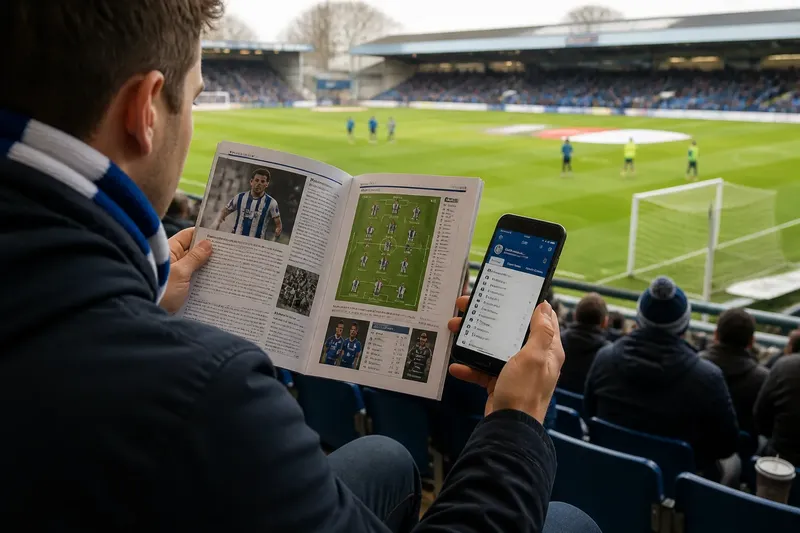
A printed programme and a digital matchday page invite different kinds of attention. If you are weighing up a printed programme or digital matchday page, start with what you want to do with the information: check it quickly, browse around, or return to it later. The right choice often depends less on the match than on how you like to read.
For quick checks
If you mainly need the line-up, kick-off details or a late update, a digital page usually fits best. You can open a club website or app, scan for the item you need and move on. That suits a busy arrival, a journey to the ground or a reader who prefers to carry as little as possible.
A phone can also bring several kinds of match information together. The page may link to player profiles, team news and venue details, so you can follow a question without searching through separate printed pages. The trade-off is that the screen may contain more than you came to see, and an alert or another app can pull your attention away.
For a pre-match glance, a printed programme is less immediate unless it is already in your hand. Yet once open, it presents information in a stable layout. You can see the page, turn back to the line-up and keep your place without scrolling or tapping.
For unhurried browsing
Choose print if you enjoy following a page wherever it leads. An interview might draw your eye to a photograph, a short note about a player, then a fixture panel. The paper format makes those neighbouring items easy to notice, even when you did not arrive with a particular question.
This kind of browsing suits a reader with a seat before play, a train ride home or a quiet moment at a café. A programme gives that pause a physical object to centre on. You can fold a corner, hold a place with a ticket or pass a page to the person beside you.
A digital page works better for browsing by topic. If you want to check a particular player or revisit a section linked from the club’s site, links can take you directly there. It is less suited to wandering between adjacent stories unless the page is well organised and the reader is happy to scroll.
Think about how much choice you want in the moment. A printed spread limits the number of things in view, which can feel calm. A digital page may offer more material, but that abundance can turn a casual browse into a sequence of small decisions about what to open next.
For keeping match details
Print is the more natural fit if you want a keepsake you can put on a shelf or slip into a drawer. The cover, paper and layout all belong to that day, and the object can bring back its setting without needing a screen. It is especially appealing if you already keep tickets, badges or other small reminders together.
Digital pages are easier to revisit when the club keeps an archive or the page can be saved. A bookmark, screenshot or saved file may help you find the line-up or match information later. But a link can change, and a screenshot may preserve only the part you remembered to capture.
Say you attend a match with a relative who likes to remember who played and what the ground felt like. You could take a printed programme home and write the date and a short note inside; later, the note and page give you a clear starting point for recalling the day. If you are more likely to search for a player’s name than keep paper, saving the digital page or a useful screenshot may suit you better.
Keeping is not the same as collecting. If you want a record of one particular match, a programme may be satisfying. If you want to consult changing details or follow links to other club material, a digital page is more convenient, provided it remains accessible.
For different matchdays
Some situations make the decision straightforward:
- You are travelling light: use the digital page for information you can carry on your phone.
- You like reading between events: choose the printed programme for a quiet, self-contained browse.
- You expect last-minute changes: check the digital page, where updates can be posted without replacing a printed item.
- You want a tangible reminder: pick up the programme if you enjoy keeping matchday objects.
- You need to share one detail quickly: a digital link or screenshot is easy to send to someone else.
- You find screens distracting: print offers a more focused way to read, with no app notifications beside the article.
You do not have to use one format for every match. A supporter might check digital team news on the way in, then read the programme at half-time. Another might skip the paper but save a page after the match. The sensible choice is the one that matches the moment, not a rule about which format counts as more authentic.
Questions readers ask?
Is a printed programme still useful?
Yes, if you want a compact, physical way to browse matchday reading or keep a record of the occasion. It is less convenient for information that may change after printing.
Can I save a digital matchday page?
Often, you can bookmark the page, save it for offline reading or capture a screenshot, depending on the site and your device. Check that the saved version includes the details you want to revisit.
Which format is better for children?
A programme can give a young reader something easy to hold and explore at their own pace. A digital page may suit a child who likes tapping through player profiles, with an adult helping them find reliable club information.
Should I buy both?
Only if each has a purpose for you. Use the digital page for quick checks and take home a programme when its stories, design or connection to that particular day make it worth keeping.
A useful matchday choice
For most readers, the decision comes down to the kind of attention they want to give the match. Digital pages favour quick access, links and updates; printed programmes favour a settled browse and a lasting object. If you are still unsure, decide before arriving whether you want to read, look something up or keep a reminder. That small choice makes the printed programme or digital matchday page easier to judge—and leaves you more room to enjoy the day itself.