A First Visit to a Sporting Museum: What to Notice
A first visit to a sporting museum becomes more rewarding when you compare labels, equipment and display context rather than simply admire the objects.
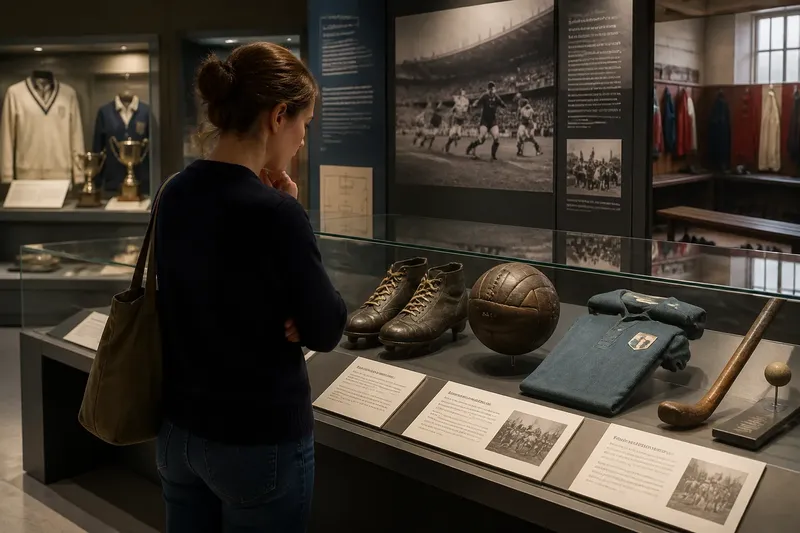
A first visit to a sporting museum is richer when you read an object label, then look for the game around the object. A pair of worn boots might tell you about materials, but the label may also connect them to a playing surface, a rule change or a particular role on the field. That shift—from object to context—turns a display into a way of understanding how sport is played and remembered.
You can make that connection in different ways. Some visitors follow the labels closely; others compare equipment across cases or move through a gallery as a visual story. Each approach suits a different kind of visit, and you can combine them without trying to see everything.
Choose Your Route
Before setting off, decide what would make the visit satisfying. Are you curious about how equipment changed, how a match unfolded, or why a modest object has been kept? A simple question gives your attention somewhere to land when a gallery is crowded with trophies, photographs and uniforms.
- Label-led: Read a small number of labels closely. Choose this if you enjoy provenance, rules and the details behind an object.
- Comparison-led: Look at similar objects together, such as two rackets or several types of footwear. Choose this if differences in materials and use catch your eye.
- Story-led: Follow the gallery’s sequence from preparation to play and remembrance. Choose this if you prefer a clear narrative over close inspection.
These are not competing methods. A label-led start can lead to a comparison, while a story-led route may make one object worth returning to. If time or energy is limited, choose one main approach and leave room for a pause.
Read Labels for Context
A useful label does more than name an object. Look for who used it, what it was used for, where it belongs in the sport and why it is on display. The date or maker may matter, but those details become more meaningful when joined to a practical setting.
Notice what the label says about use. Did the object suit a particular surface, position or style of play? Does it explain a rule or a change in training? A wooden bat, for instance, may appear self-explanatory until its label links its shape to the demands of a particular game.
Also notice what remains unsaid. A label might identify a club or athlete but offer little about the people who maintained the equipment or the conditions in which it was used. Treat that gap as a boundary, not an invitation to invent a story. The display can still prompt a question to take to a staff member or a museum guide.
Compare Objects in Use
Comparing objects helps you see design as a response to sporting conditions. Look across cases for changes in grip, padding, shape or fastening. Then check whether labels explain the difference. A newer-looking item does not automatically tell you how or why the sport changed.
Imagine you spot two helmets displayed in separate sections. One label connects a helmet to a particular position; another explains the materials and protective purpose of its design. Comparing those details could show how equipment responds both to the wearer’s role and to concerns about play, without treating the objects as interchangeable.
Context can also come from nearby photographs, diagrams or film. Check whether an image shows the object in use, a similar item, or simply the team and venue. That distinction matters: a photograph beside an object can help explain its setting, but it does not necessarily document that exact object being worn.
Follow the Display Story
Some galleries arrange objects by period, others by sport, person or theme. Read the introductory panel to understand the route the museum has chosen. Then see how individual labels support it. A sequence of uniforms might trace changing rules; a group of tickets and scorecards might place equipment within the experience of a match.
Try looking at the space between objects, too. What has been placed together, and what sits apart? A trophy beside a well-used kit may suggest a relationship between achievement and daily preparation. That pairing is a curatorial choice, not proof that the objects belonged to the same moment, so check their labels before drawing a connection.
If a gallery includes a recreation of a changing room or playing area, treat it as an interpretation. Notice which details are labelled and which are there to evoke a feeling of place. The distinction lets you enjoy the scene while keeping the evidence in view.
Which Route Fits You?
Should I read every label?
No. Choose labels that answer your question or add context to an object that has caught your attention. A few carefully read labels can be more useful than rushing through every panel.
How do I compare two objects?
Start with one visible difference, such as material or shape, then look for an explanation in each label. Compare their stated users and purposes as well, since similar objects may serve different roles.
What if a label gives little detail?
Look for a nearby image, map or display panel that places the object in a sporting setting. If the context remains unclear, note the question rather than filling the gap with a guess.
Which approach suits a short visit?
Choose one gallery and one question, then use either close label reading or a quick comparison of related objects. That gives the visit a clear focus without turning it into a race through the museum.
Leave With One Connection
Before leaving, choose one object and put its story into a plain sentence: what it is, how it was used and what its display helps you notice about the sport. If one part is uncertain, say so. That small distinction between what the label states and what you infer makes the memory more reliable.
A first visit to a sporting museum need not end with a favourite trophy or a complete tour. It may be enough to remember how a piece of equipment met a particular playing condition, and which label helped you see the connection. The next time you encounter that kind of object—in a photograph, a club collection or another gallery—you will have a sharper question to bring with you.